What Is Concierge Physical Therapy? A Better Way to Retrain
What Is Concierge Physical Therapy? A Better Way to Retrain
What Is Concierge Physical Therapy? A Smarter Approach for People Who Refuse to Settle
Waiting rooms. Distracted therapists. Generic exercise sheets. Does your physical therapy feel more like an assembly line than actual healing?
It’s frustrating, inefficient, and frankly, you deserve better.
Unfortunately, this is the reality of traditional physical therapy for many Americans. It is not because therapists do not care (most care deeply), but because the insurance system forces them to see too many people at once. You end up squeezed into a model that was never designed for your actual needs.
Concierge physical therapy exists because we believe you deserve more than a generic exercise sheet. This model is built for those who want more time, more attention, and elite expertise directed at their specific movement goals. It represents a shift toward root-cause retraining and outcomes that actually last.
The Mechanics of Concierge Physical Therapy
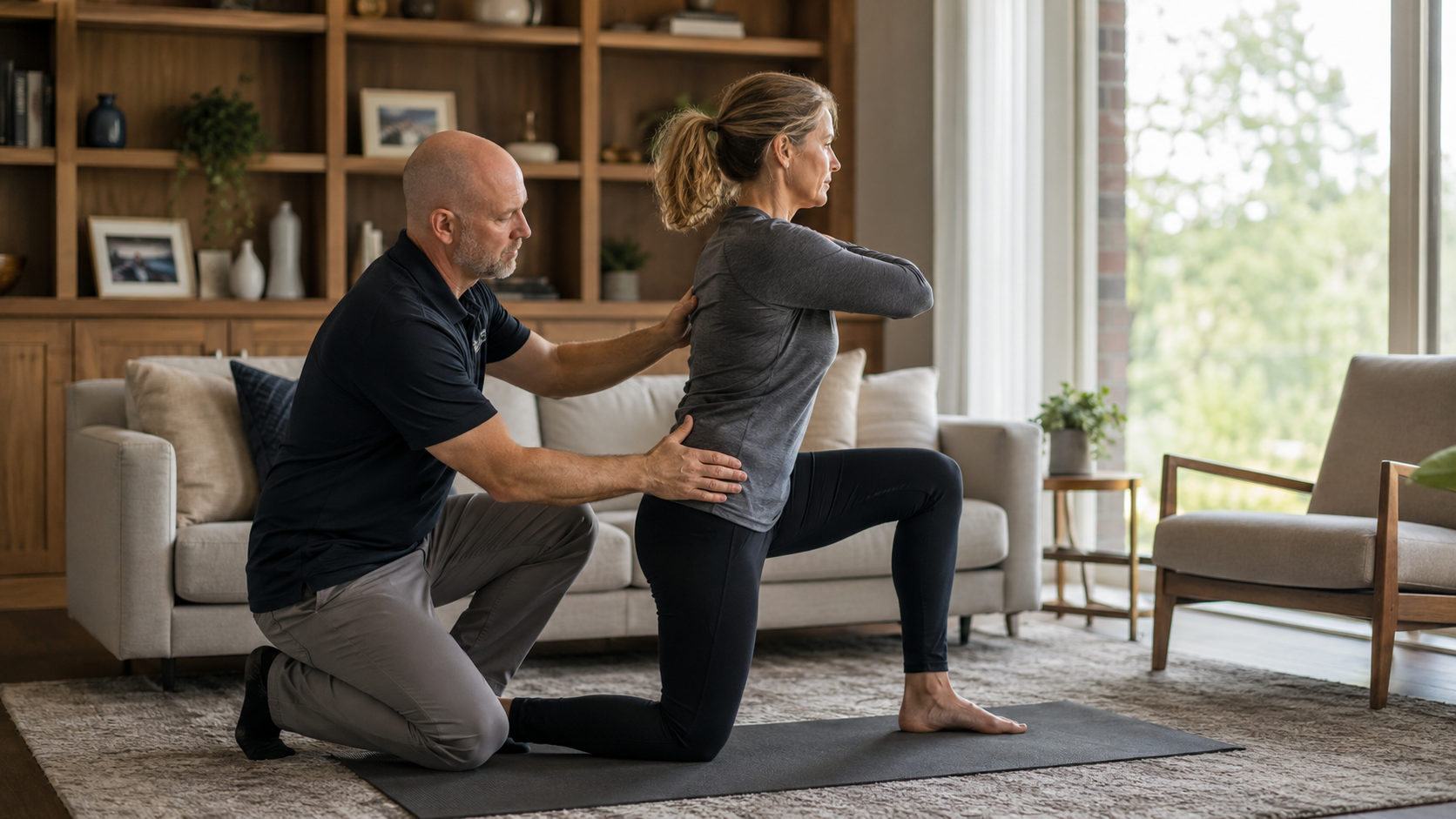
At its simplest, concierge physical therapy means working directly with a private physical therapist, free from the constraints of crowded clinics. We bring the expertise to you, whether that is in your home, at your gym, or through a virtual session.
The most important part of this model is the focus on movement science. In a standard clinic, you might only get fifteen minutes of actual attention.
In concierge care, you get uninterrupted, one-on-one PT throughout the appointment. We watch you move in real time, adjusting every exercise to fit your body’s unique design.
Because this root-cause approach eliminates the guesswork, our clients bypass the endless months of traditional therapy. On average, they experience dramatic relief and restored movement mechanics in just 2 to 4 dedicated sessions.
The Insight: Why "Strength" Isn't Enough
Most people think they are in pain because they are "weak."
In reality, pain is often a signaling problem.
Your brain has stopped trusting a joint, so it creates tension as a protective suit of armor. You cannot simply "strengthen" your way out of a neurological protection map.
You have to retrain your body. This requires the kind of meticulous observation that only happens in a private, one-on-one setting.
Who Concierge Physical Therapy Is Actually For
While this model is a premium investment, the value is clear for those who prioritize their movement health and their time.
Busy Professionals Who Value Efficiency
If your calendar is full of meetings and travel, driving to a clinic three times a week is not realistic.
In-home PT and virtual sessions eliminate the need for a commute. We respect your schedule by offering a premium, scientifically backed shortcut to peak performance.
Athletes Ready to Restore Control
Many runners and lifters get stuck in a cycle of injury because traditional PT only treats the symptoms.
We focus on longevity. By identifying the root cause, like a postural limitation causing knee pain, we help you return to fitness with total confidence.
Recovery and Movement Autonomy
Recovering from a procedure like a disc replacement requires more than basic exercises. You need a doctor-led, risk-free environment to rebuild.
We use our proprietary NeuroAlign Method to ensure your body is retraining correctly, helping you overcome the fear of movement and regain your "old normal".
Moving Beyond Symptom Management
The traditional medical system is great at crisis management, but it often fails at movement health.
Research suggests that personalized, one-on-one care leads to significantly higher patient satisfaction and better functional outcomes than standardized, multi-patient models.
When a therapist has 15 patients a day, they have to use generic protocols. When we work with you, we use spine-first rehab training to ensure your foundation is solid before we layer on intensity.
We aren't just fixing a knee; we are making the body last a lifetime.
Performance and Longevity Insights
1. How many sessions will I need?
Because our approach is so targeted, many clients see clear results in just 2 to 4 sessions. Unlike traditional PT, which can drag on for months, our goal is to restore control efficiently so you can get back to your life.
2. Is concierge physical therapy only for "injured" people?
No. We work with many active adults who want to improve their mobility and stability to prevent future aches. If you feel stiff or "off" during your workouts, it is a sign that your body's alignment needs retraining before a major injury occurs.
3. Do I need a full gym for in-home PT?
You don't need any equipment. We provide the expertise and tools needed to transform any space into a high-performance environment. We adapt the session to the activities you actually do in your daily life, whether that's playing with grandchildren or training for a triathlon.
4. How does concierge physical therapy support long-term independence?
For our active retirees, concierge care is about fighting the "fear of decline". By retraining fundamental patterns, we ensure you remain vibrant and self-sufficient. Pain is not an inevitable part of aging; it is often just a sign that your movement patterns need an update.
Step Toward Lasting Movement Health
Don’t settle for average rehab only managing your symptoms. It’s time to start retraining your body for a lifetime of movement.
CTA BUTTON: Schedule your private consultation today.
You deserve a recovery plan as elite as your ambitions.
Disclaimer: We are passionate about sharing movement science and recovery tips to help you live a vibrant, active life. However, the information on this blog is for educational purposes only and should not be considered a substitute for personalized medical advice, diagnosis, or treatment. Every body is unique! Always consult with a Doctor of Physical Therapy or your primary physician before starting any new exercise or rehabilitation program to ensure it is safe and appropriate for your specific needs.
