Hybrid Physical Therapy: Real-World Training for Real-World Results
Why Hybrid Physical Therapy Keeps Your Progress Consistent When Clinics Can't
It’s only been a few weeks but your rehab program is showing results. Less pain. More energy. You’re feeling like you again.
Then. Life happens.
Something pulls you away for a session or two or more. By the time you’re finally back in the sterile waiting room, you’re back to zero. In pain and starting over.
This isn’t weak willpower or poor time management. This is a failure of a rigid medical model.
Most physical therapy is built on the idea that you must travel to a specific building to get better. But for the active adult with a demanding career and a full life, that model is full of friction. Hybrid physical therapy removes that friction.
By blending in-person expertise with virtual coaching, we make sure that your progress doesn't depend on perfect circumstances; it depends on consistent movement.
Closing the "Consistency Gap"
In movement science, we know that the brain doesn't learn new patterns through sporadic input. It learns through frequent, high-quality repetition.
Traditional clinics suffer from a "Consistency Gap." You see a therapist on a Tuesday, they coach your form, and then you are on your own for six days.
During that week, it is easy for old habits to creep back in. You might be "doing your exercises," but if you are doing them with a slight compensation, you are actually reinforcing the very problem you're trying to fix.
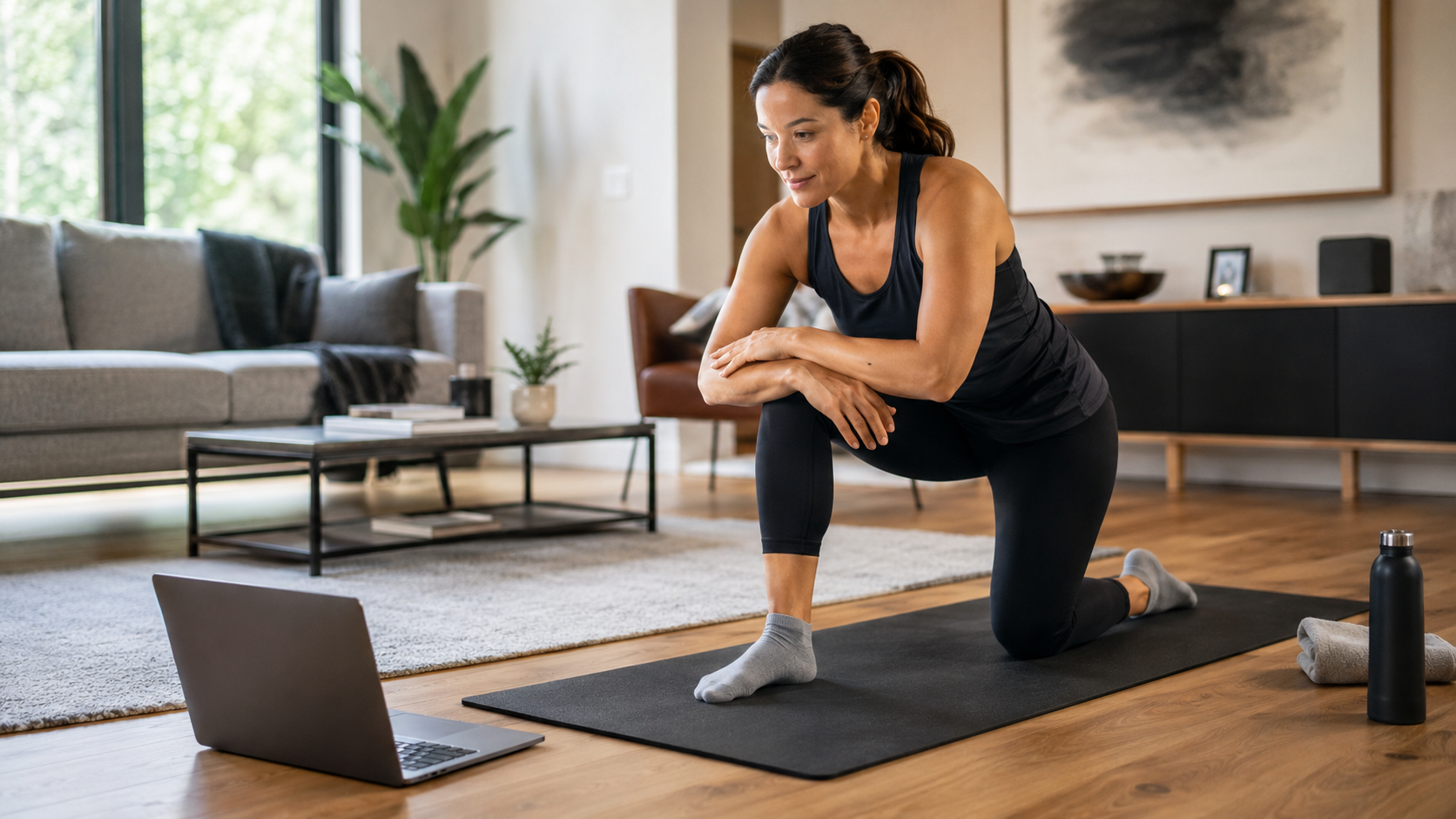
Our hybrid model closes this gap. By using virtual sessions between our in-person visits, we can provide real-time adjustments in your own environment. This keeps your NeuroAlign retraining on track, ensuring that every rep you do at home is actually moving you toward longevity, not another flare-up.
The Power of Environmental Coaching
There is a massive clinical advantage to being coached in your "natural habitat."
In a clinic, everything is controlled. The floor is flat, the lighting is perfect, and the equipment is standard. But your life doesn't happen in a clinic.
Through virtual physical therapy sessions, we see the real-world triggers for your pain. We see the chair you sit in, the way you lift your gym bag, and how you navigate your home. We effectively eliminate the "clinic-to-home" translation error.
This precision enables our clients to avoid months of standard rehab. Most enjoy total movement autonomy and lasting relief in just 2 to 4 targeted sessions.
When we can coach your movement in the places where you actually live and work, the results stick. We aren't just teaching you "PT exercises"; we are retraining your body to work in the real world.
Why Manual Therapy Needs a Movement Partner
We are often asked: Can I really get better without someone "cracking" my back every week?
The answer lies in how the body heals. Hands-on manual therapy, which we provide during our in-person concierge sessions, is a powerful tool for opening a "window of opportunity." It can quickly reduce pain and improve mobility. However, that window closes if you don't fill it with the right movement.
The hybrid model uses in-person sessions for that high-level manual work and virtual sessions to "lock in" the gains. This ensures that the mobility we earn on the treatment table becomes a permanent part of your movement health. It is the difference between a "quick fix" and lasting relief.
A Model Built for High-Performers
We understand that for our clients in New York and Chicago, time is the most valuable resource.
The traditional model, driving to a clinic, waiting in a lobby, and sharing a therapist’s attention with three other patients, is an outdated use of that resource.
Our hybrid concierge model respects your time. It allows for:
Ultimate Flexibility: Transition between in-home, in-club, and virtual sessions as your schedule shifts.
One-on-One Expertise: Every minute of your session is spent with a Doctor of Physical Therapy, not an assistant or a technician.
Faster Outcomes: By preventing the "drift" back into old habits, most of our clients see clear, functional progress in just 2 to 4 sessions.
Common Questions About the Hybrid Physical Therapy
1. How do I know if the hybrid model is right for my injury?
Most mechanical issues, like back pain, sciatica, and neck tension, respond best to the hybrid model because they require pattern retraining. During your initial assessment, we’ll determine the exact ratio of in-person to virtual sessions your body needs to stay on track.
2. Is virtual PT covered the same way as in-person?
Yes. Because you are working one-on-one with a licensed DPT, virtual sessions are a medical service. We provide all the documentation you need for your records or HSA/FSA reimbursement.
3. What if I don't have a lot of space at home?
If you have enough room to lay down a yoga mat, you have enough room for world-class rehab. We specialize in using the environment you already have to build movement autonomy.
4. Will I see the same therapist every time?
Absolutely. Continuity of care is the backbone of the Fit-Habilitation approach. The DPT who sees you in person is the same one who coaches you virtually. They know your movement biography, your compensations, and your goals.
5. What happens if I have a sudden flare-up between sessions?
This is where the hybrid model shines. Instead of waiting a week for the next clinic opening, we can often jump on a quick virtual call to assess the situation, calm your nervous system, and adjust your plan immediately.
Stop Managing the Gap and Start Mastering Your Movement
Don’t settle for a recovery plan that breaks the moment life gets busy. Our hybrid model is a smarter, scientific approach to ensuring your progress never stalls.
The clinic is optional. Your progress is not.
Connect with our team today.
Disclaimer: We are passionate about sharing movement science and recovery tips to help you live a vibrant, active life. However, the information provided on this blog is strictly for educational purposes and should not be considered a substitute for personalized medical advice, diagnosis, or treatment. Every body is unique! Always consult with a Doctor of Physical Therapy or your primary physician before starting any new exercise or rehabilitation program to ensure it is safe and appropriate for your specific needs.
