Return to Exercise PT: Retraining for Resilience, Not Just Recovery
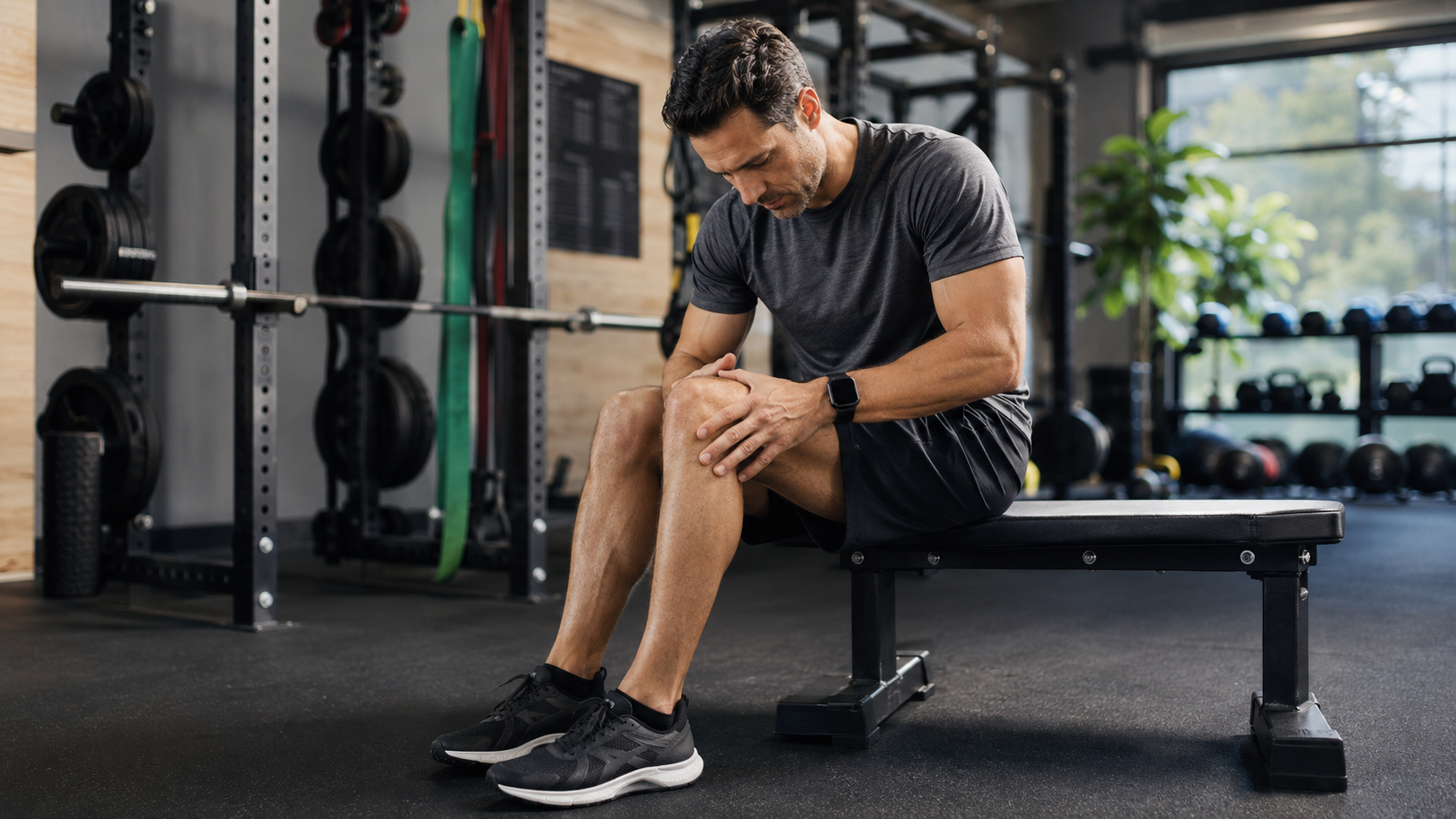
Return to Exercise PT: Why the Standard Comeback Plan Keeps Failing You
You get hurt.
You rest.
You ease back into your workouts… It happens again.
Same pain. Same spot. Double the frustration.
Sounds familiar? There’s a reason why.
Your body and willpower didn't fail you; your comeback plan did. This is a failure of the "wait-and-see" recovery model. It’s exhausting, inefficient, and honestly, it’s a waste of your time.
Most return-to-exercise protocols treat an injury as an isolated mechanical breakdown. They assume that once the tissue heals, you are ready to load.
The real challenge isn't healing the tissue, it’s retraining the system. When you're sidelined, your body doesn't just "rest"; it adapts.
It creates compensations and protective habits that don't disappear just because the pain has stopped. If you return to training without addressing these hidden patterns, you aren't loading a healthy body; you are loading a malfunctioning one.
The Hidden Cost of the "Rest and Return" Strategy
The urge to get back to the gym is powerful. For the active adult, movement is more than a hobby; it is how you manage stress and maintain your identity.
But pain is a lagging indicator. By the time you feel that "twinge," your nervous system has already spent weeks shifting load away from the injury and into other joints.
These workarounds become your "new normal." This is why so many athletes experience a different injury in a neighboring joint shortly after returning to play.
The original site healed, but the movement biography was rewritten in a way that left you vulnerable.
At Fit-Habilitation, we don't just wait for the tissue to heal. We use the recovery period to identify and dismantle these compensations so you return more resilient than you were before the injury.
What Active Adult Rehab Actually Needs to Address
A successful return-to-fitness plan isn't based on a calendar; it’s based on functional benchmarks. We don't care how many weeks have passed; we care how your body handles load.
Zooming Out: The Full-Body Assessment
Most rehab is far too narrow. If your shoulder hurts, they treat the shoulder. But we know that shoulder stability often starts at the opposite hip.
Our process begins with a full-body movement screen. We look at how you squat, hinge, and rotate to find the "silent" restrictions that are dumping stress into your injury site.
Updating the Movement "Software"
Even after a muscle is physically strong, your brain may still be running "protective code." This is where our proprietary NeuroAlign Method comes in.
We use specific neurological inputs to retrain your nervous system to trust your body again. By reducing the "threat" signal, we can unlock a range of motion and power that traditional stretching and strengthening can't.
Why Generic Protocols Fail High-Performers
Traditional PT clinics are often designed for "general health": getting you back to walking or basic daily tasks.
But for our clients, "walking" isn't the goal. The goal is a 300-pound deadlift, a sub-4-hour marathon, or a high-intensity HIIT class.
Generic protocols don't account for the high-demand margins of an active life. They also don't account for your specific history: the decades of desk work, the old ankle sprains, or the unique way your body organizes itself under fatigue.
We focus on high-performance functional benchmarks rather than just "symptom-free living," eliminating the guesswork of the return-to-play process. In improving how your body handles actual weight and intensity, our clients bypass the re-injury cycle and return to peak training capacity sooner.
This is why personalized physical therapy isn't a luxury; it’s a clinical necessity. We build a roadmap specifically for your goals, ensuring that every session bridges the gap between rehab and performance.
The Concierge Advantage: Rehab in Your Reality
One of the biggest reasons comeback plans fail is a lack of consistency. High-performing adults don't have time to sit in waiting rooms or commute across the city for a 15-minute check-in.
Our hybrid concierge model (offering in-home, in-club, and virtual sessions) removes the friction.
It also enables us to see you in your actual training environment. When we can coach your form in your own gym or analyze your ergonomics in your home office, we find the real-world triggers for your pain.
This level of precision is why most of our clients see clear, functional results in just 2 to 4 sessions.
Reframing the Goal: Training for Longevity
We want to shift your mindset from "getting back" to "getting better." If you return to the same movement patterns that caused the injury, you are just resetting the clock for the next flare-up.
True movement health means using your rehab as an opportunity to upgrade your system.
By restoring mobility in your mid-back and stability in your pelvis, we aren't just fixing an injury; we are building a foundation for the next twenty years of training. This is longevity-focused rehab.
Insights for a Smarter Comeback
1. How do I know if I'm "ready" to add weight again?
Readiness is about "movement quality under fatigue." If your form breaks down the moment you get tired, your nervous system isn't ready for that load yet. We use specific benchmarks, like the ability to maintain a stable spine during a loaded carry, to determine exactly when it is safe to progress.
2. Can I really retrain my nervous system through a screen?
Absolutely. Since NeuroAlign focuses on communication between your brain and your muscles, virtual sessions are incredibly effective. We coach you through the cues and positions that "re-map" your body, giving you the tools to manage your own recovery from anywhere.
3. What is the biggest mistake people make in the "bridge" phase?
Neglecting the "boring" stuff too soon. The small stability drills might not feel like a workout, but they are the "glue" that keeps your big lifts safe. We integrate these into your warm-ups so they become a permanent part of your movement health.
4. Why does my injury hurt more in the morning?
This is often related to "fluid stasis" and the nervous system's heightened sensitivity after sleep. We provide specific "morning resets" to calm the system and prime your joints for the day ahead, reducing that initial stiffness.
5. Do I need a doctor's referral to start active adult rehab?
In most cases, no. As Doctors of Physical Therapy, we are primary care providers for musculoskeletal health. We can perform a full diagnostic assessment and start your retraining immediately, saving you weeks of waiting for a specialist appointment.
Reclaim Your Performance
You didn't build your fitness by settling for "average," so don’t settle for a rehab plan that only gets you halfway there.
You deserve a comeback that’s a calculated, expert-led progression toward your best self.
CTA BUTTON: Connect with our DPT team today.
Don't just return to exercise - upgrade your movement.
Disclaimer: We are passionate about sharing movement science and recovery tips to help you live a vibrant, active life. However, the information provided on this blog is strictly for educational purposes and should not be considered a substitute for personalized medical advice, diagnosis, or treatment. Every body is unique! Always consult with a Doctor of Physical Therapy or your primary physician before starting any new exercise or rehabilitation program to ensure it is safe and appropriate for your specific needs.
